Melbourne Annual Macro Policy Meeting
Monday 26 and Tuesday 27 October, the University of Melbourne
The annual Melbourne Macro Policy Meeting gathers academics and researchers in policy institutions, and policy analysts to discuss the latest research and thinking about macroeconomic issues and policies. This event is co-hosted by the Department of Economics and the Melbourne Institute.
Details
- Two-day event, Monday 26 - Tuesday 27 October 2026
- Held at the Melbourne Business School, 200 Leicester Street, Carlton 3053
Keynote Speakers
- Michele Lenza
Head of the Monetary Policy Research Division, European Central Bank - Jianjun Miao
Tsingshan Chair Professor of Economics, Zhejiang University
Policy panel - Economic policy implications of AI
- Stephen King, Commissioner, Productivity Commission
- Mariano Kulish, Professor of Macroeconomics, University of Sydney
- Claude Lopez, Head of Economic Research, Reserve Bank of Australia
- Pär Osterholm, Assistant Secretary, Data and Structural Analysis Branch, Macroeconomic Analysis and Policy Division, Australian Treasury
- John McDermott CRSNZ, Executive Director, Motu Economic and Public Policy Research, New Zealand (moderator)
Important dates
| Monday 1 June | Paper submissions open |
| Thursday 20 August | Paper submissions close |
| Monday 7 September | Notification of paper acceptance |
Monday 21 September | Registrations open |
Monday 19 October, 12pm | Registrations close |
Monday 26 and Tuesday 27 October | Conference |
Organising committee
Mei Dong, Professor, Department of Economics, Faculty of Business and Economics, the University of Melbourne
Tim Robinson, Associate Professor, Melbourne Institute of Applied Economic and Social Research, the University of Melbourne
Sponsors
View the 2025 Macro Policy Meeting program
The Macro Policy Meeting will take place at the Melbourne Business School, 200 Leicester St, Carlton, the University of Melbourne.
Day 1 - Monday 26 October
| Time | Session |
|---|---|
| 8:30am - 9:00am | Registration |
| 9:00am - 9:15am | Opening remarks - |
| 9:15am - 10:45am | Session 1: Credit and Financial Markets The limit of credit policy and its fiscal remedy Belief disagreement and the social value of leverage Stock market participation, liquidity, and monetary policy
|
| 10:45am - 11:10am | Morning Tea |
| 11:10am - 12:25pm | Keynote Address |
| 12:25pm - 1:05pm | Lunch |
| 1:05pm - 2:35pm | Session 2: Australian Policy 1 Insurance effects of tax-and-transfer progressivity Wages when inflation is lower and higher than expected |
| 2:35pm - 3:00pm | Afternoon Tea |
| 3:00pm - 5:00pm | Session 3: Macro Econometrics Structural macroeconomics with daily data Unpacking global inflation Monetary policy news and long-run inflation expectations: Measuring news where expectations are formed |
| 5:30pm - 9:00pm | Dinner Note: only for attendees who registered |
Day 2 - Tuesday 27 October
| Time | Session |
|---|---|
| 8:45am - 9:15am | Registration |
| 9:15am - 10:45am | Session 4: Firm Heterogeneity The geography of financial frictions Firm heterogeneity and the aggregate effects of innovation policy Innovation, diffusion, and misallocation: Understanding China’s recent productivity dynamics |
| 10:45am - 11:15am | Morning Tea |
| 11:15am - 12:30pm | Keynote Address |
| 12:30pm - 1:15pm | Lunch |
| 1:15pm - 2:45pm | Policy Panel |
| 2:45pm - 3:15pm | Afternoon Tea |
| 3:15pm - 4:45pm | Session 5: Australian Policy 2 Labor supply effects of monetary policy: Evidence from Australian mortgage holders Sticky rents: Understanding how landlords do and don’t change rents |
| 4:45pm - 5:00pm | Closing remarks - Professor Phillip McCalman |
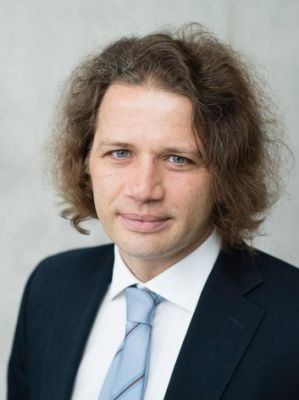
Dr Michele Lenza
European Central Bank
Michele Lenza is head of the Monetary Policy Research Division at the European Central Bank. His research covers monetary policy and macroeconometric modelling and methods.
He is a Fellow of International Association for Applied Econometrics (IAAE), the Euro Area Business Cycle Network, and the Centre for Economic Policy Research (CEPR).
Michele’s research has been published in journals such as Econometrica, The Review of Economics and Statistics, the Economic Journal, the Journal of the American Statistical Association, the Journal of Econometrics, and the Journal of the European Economic Association.
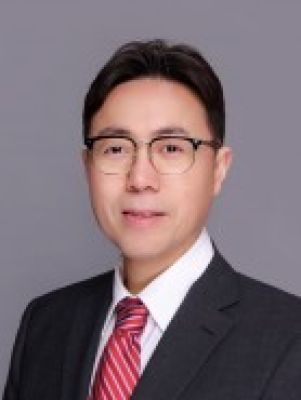
Professor Jianjun Miao
Zhejiang University
Jianjun Miao is a Tsingshan Chair Professor of Economics at Zhejiang University. His research covers macroeconomics and finance, including topics such as the implications of asset price bubbles and rational inattention.
He is a Fellow of the Society for the Advancement of Economic Theory, and a Senior Fellow of the Asian Bureau of Finance and Economic Research. Jianjun is an associate editor of the American Economic Journal: Macroeconomics, Economic Theory and the Journal of Monetary Economics.
Jianjun’s research has been published in journals such as Econometrica, American Economic Review, Review of Financial Studies, Journal of Financial Economics and the Journal of Finance.
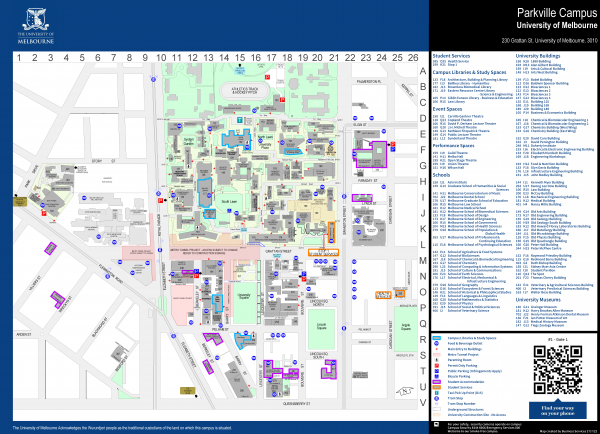
The 2026 Melbourne Annual Macro Policy Meeting will take place at Melbourne Business School, located on The University of Melbourne's Parkville campus - 200 Leicester Street, Carlton, 3053.
Accessible Wayfinding document download (DOCX 38.0 KB)
Getting to the University
From the CBD:
To get to The University of Melbourne from Melbourne's city center, simply catch any tram going up Swanston Street. These trams run from Flinders Street Station and allow you to disembark at Stop 1 – opposite the University.
The Veriu Queen Victoria Market Hotel is a ten-minute walk to the University and located in the vibrant area of the Queen Victoria Market.
The Crown Plaza Melbourne Carlton is also a short walk to the University, located on Swanston St.
A third nearby option is the Lyf on Elizabeth Melbourne in the CBD.
From Carlton:
Zagame's House, Best Western Plus Travel Inn, and Melbourne Carlton Central Apartment Hotel are a 12–15 minute walk from the University of Melbourne.
Navigating The University of Melbourne
The University of Melbourne was founded in 1853 and is Australia’s second oldest university. The University spans two campuses with main campus located in Parkville and the second campus located in Southbank, where the Victorian College of the Arts resides.
You can view map of the Parkville Campus below, download a PDF copy, or access The University of Melbourne interactive map.
Navigating Melbourne
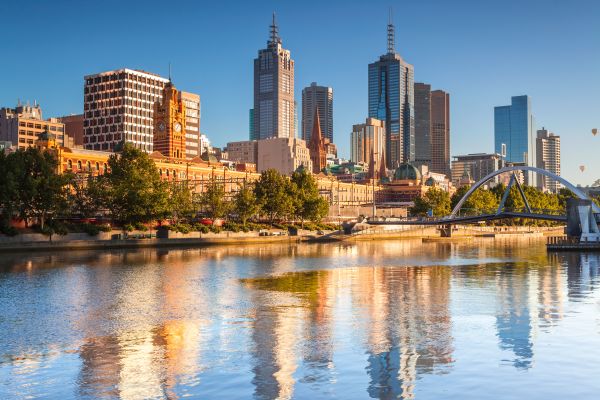
Melbourne, the capital of Victoria, is a beautiful city with fine buildings and spacious parks, which gives Melbourne its 'garden-city' title. Settlers from a variety of countries have given Melbourne a cosmopolitan outlook and the city has developed as the cultural, fashion, shopping, sporting and culinary centre of Australia.
Catching public transport:
Public transport commuters travelling on a full fare ticket are now able to use a credit card, phone or smartwatch across Melbourne.
Concession passengers will still need a myki card. You can purchase a myki card at most convenience stores or major train stations across Melbourne for $6.
There is a ‘Free Tram Zone’ within the Melbourne CBD, however outside of this area you will need to 'Touch On' your device, card or myki. You can download a map of the Free Tram Zone here. The free PTV app is also a useful resource to help with navigation by public transport.
Travelling from the airport:
The SkyBus travels from Tullamarine Airport to Southern Cross Station in the Melbourne CBD. The shuttle bus leaves the airport roughly every 20 minutes and costs $25.90 for a one-way pass or $43.40 for a return fare. Private shuttle buses from the airport can also be booked.
Things to see and do in Melbourne:
The central business district of Melbourne is based around the delta of the Yarra River at the top of a large bay. The city area contains some of Australia's finest parks, gardens and historic buildings, all within walking distance. Melbourne is also Australia's entertainment, sporting and cultural capital. Nearly every cuisine is represented in Melbourne's hundreds of restaurants and cafes.
Places of interest include:
- Melbourne Zoo
- Melbourne Skydeck for the awe inspiring view of Melbourne from the Southern Hemisphere's highest viewing platform
- Fed Square, a venue for food, arts, culture and public events across from Flinders St Station, including the amazing Torres Strait owned and operated Indigenous restaurant, Mabu Mabu
- Many waterfront restaurants and cafes along the Yarra River or the District Docklands precinct
- The National Gallery of Victoria
- Royal Botanic Gardens, recognised as one of the world's best, extending over 38 hectares and housing a collection of more than 8,500 species of plants from around the world
- The Koorie Heritage Centre, exploring 60,000 years of culture of the Indigenous people of south-eastern Australia
For more information on Melbourne and its surrounding regions, please visit the following websites:
Melbourne Institute of Applied Economic and Social Research
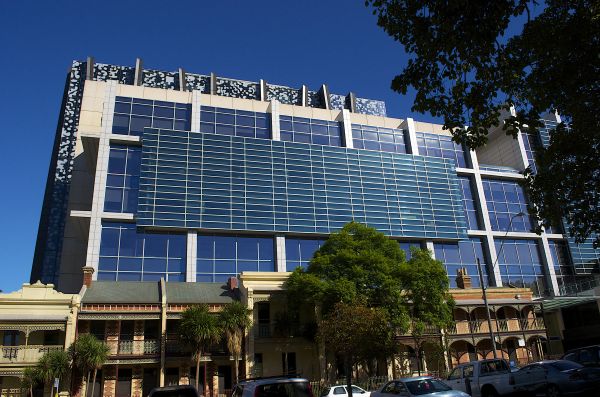
The Melbourne Institute of Applied Economic and Social Research has worked for over 60 years to advance opportunity, equity, and prosperity in Australia and our region. Our world-class economists conduct rigorous, independent research and analysis, providing an evidence base for effective policy reform. We are a trusted partner for governments, industry, and communities, working to solve the complex challenges of our time.