2026 HILDA Survey Research Conference
Thursday 1 & Friday 2 October, the University of Melbourne
The Melbourne Institute of Applied Economic and Social Research is proud to present the 2026 HILDA Survey Research Conference, supported by the Australian Government Department of Social Services (DSS).
The conference will showcase research findings that track how the lives of many Australians have been changing over the course of the 21st century, and the social, economic, and institutional forces driving these changes. Particular attention will be given to the consequences of change, including impacts on health and subjective well-being, employment and jobs, family life and incomes and wealth.
The HILDA Survey Research Conference will be held at the University of Melbourne over two days:
Thursday 1 and Friday 2 October, with an optional three-course dinner on Thursday evening at the Woodward Conference Centre at the University.
Standard registration (conference and dinner): $400
Standard registration (conference only): $300
Student registration (conference and dinner): $200
Student registration (conference only): $150
Important dates
Thursday 18 December 2025 | Paper submissions open |
Friday 15 May 2026 | Paper submissions close |
Friday 26 June 2026 | Notification of paper acceptance |
Monday 13 July 2026 | Registrations open |
Wednesday 23 September 2026 | Registrations close |
Thursday 1 & Friday 2 October 2026 | HILDA Survey Research Conference |

About HILDA
The Melbourne Institute has championed best-practice longitudinal survey methods and enabled researchers to produce powerful insights into Australian life via the Household, Income and Labour Dynamics in Australia Survey for more than two decades.
The HILDA Survey Research Conference will take place at the The Spot, 198 Berkeley St, the University of Melbourne.
Day 1 - Thursday 1 October
| Time | Session | Location |
|---|---|---|
|
8:30 am - 9:00 am | Registration | Ground Floor Foyer |
|
9:00 am - 9:30 am | Welcome to Country | Copland Theatre |
|
9:30 am - 10:30 am | Keynote Address Drawing on longitudinal research, including extensive analysis of the HILDA dataset, this presentation demonstrates that housing affordability, stability, and quality significantly protect mental and physical health. The presentation makes an economic case that investing in healthy housing through rental standards, affordability support, and improved conditions would generate substantial health gains and cost savings.
| Copland Theatre |
| 0:30 am - 11:00 am | Morning Tea | Level 1 |
| 11:00 am - 12:30 pm | Session 1A The wellbeing implications of financial hardship: Entry, persistence, and recovery in Australia - Peter Ngigi, Deakin University Two decades of hidden transitions: A joint latent Markov analysis of mental health and life satisfaction trajectories in Australia - Oyelola Adegboye, Charles Darwin University | Room 4007, Level 4 |
Session 1B Do mental health declines contribute to falling fertility motivations? - A cohort analysis from Australia - Natalie Nitsche, Australian National University | Room 4012, Level 4 | |
Session 1C The interplay between migration and residential insurance in response to natural disasters - Ha Nguyen, The Kids Research Institute Australia | Room 4014, Level 4 | |
|
12:30 pm - 1:15 pm | Lunch | Level 1 |
| 1:15 pm - 2:00 pm | Poster Session | Level 1 |
| 2:00 pm - 3:30 pm | Session 2A Disability, labour productivity and lifetime earnings- New evidence from Australia - Man Hin (Iris) Chio, Australian National University Disability employment and working from home in Australia - Aaron Mollross, Australian National University | Room 4007, Level 4 |
Session 2B Compatibility in personalities and non-cognitive skills and relationship dissolution in Australia - Xiaodong Gong, University of Canberra | Room 4012, Level 4 | |
Session 2C Monetary and multidimensional poverty in Australia: Overlap, persistence and prediction - Melek Cigdem-Bayram, Melbourne Institute | Room 4014, Level 4 | |
|
3:30 pm - 4:00 pm | Afternoon Tea | Level 1 |
| 4:00 pm - 5:30 pm | Session 3A Fatherhood, wellbeing, and social isolation: Longitudinal evidence around the birth of a first child - Jan Kabátek, Melbourne Institute | Room 4007, Level 4 |
Session 3B Health assimilation of Australian immigrants - Rennie Lee, The University of Queensland | Room 4012, Level 4 | |
Session 3C The effect of acquiring disability on employment outcomes in Australia - Mingji Liu, Economics Researcher Labour mobility of award-reliant employees - Jamie van Netten, Fair Work Commission | Room 4014, Level 4 | |
| 6:00 pm - 10:00 pm | Dinner Speaker: Matt Flavel, Deputy Secretary, Social Security, Department of Social Services | Woodward Conference Centre, 185 Pelham Street, Carlton |
Day 2 - Friday 2 October
| Time | Session | Location |
|---|---|---|
| 8:30 am - 9:00 am | Registration | Ground Floor Foyer |
|
9:00 am - 10:30 am | Session 4A Housing tenure as a structural determinant of sleep quality in Australia - Kate Mason, The University of Melbourne | Room 4007, Level 4 |
Session 4B How successful are childcare subsidy reforms in promoting childcare usage and maternal employment in Australia? - Lina Doan, Aalto Pty Ltd Fertility intentions are declining among young Australians with each subsequent birth cohort - Emily Woodthorpe, Australian National University | Room 4012, Level 4 | |
Session 4C Mapping generative AI exposure across Australia's ageing and gender-segregated workforce - Suneha Seetahul, The University of Sydney | Room 4014, Level 4 | |
|
10:30 am - 11:00 am | Morning Tea | Level 1 |
|
11:00 am - 12:30 pm | Session 5A Social health dynamics around the onset of long-term health conditions - Fikru Rizal, Monash University | Room 4007, Level 4 |
Session 5B I think my father was a project manager: Reliability and validity of parental occupation and schooling measurement in the HILDA survey - Ann Evans, Australian National University | Room 4012, Level 4 | |
Session 5C Do weekend workers like their jobs? - Harshita Bhatia, Melbourne Institute | Room 4014, Level 4 | |
|
12:30 pm - 1:30 pm | Lunch | Level 1 |
|
1:30 pm - 3:00pm | Session 6A Neighbourhood characteristics and mental health among Australian adults - Syed Afroz Keramat, The University of Melbourne | Room 4007, Level 4 |
Session 6B Beyond the traditional-egalitarian continuum: Rethinking gender attitudes as multidimensional - Natalie Nitsche, Australian National University | Room 4012, Level 4 | |
Session 6C Measurement error and the dynamics of consumption inequality - Josh Clyne, e61 Institute | Room 4014, Level 4 | |
|
3:00 pm - 3:30 pm | Afternoon Tea | Level 1 |
|
3:30 pm - 4:30 pm | Keynote Address This presentation explores the conceptual foundations of self-control in both psychology and economics, focusing on public policy insights and the new opportunities for quantifying and analysing self-control in the Australian context. Moderator: Nicole Watson, Co-Director HILDA Survey Project, Melbourne Institute, The University of Melbourne | Copland Theatre |
| 4:30 pm - 4:45 pm | Closing Remarks | Copland Theatre |

Professor Deborah Cobb-Clark AO FASSA
The University of Sydney
Deborah Cobb-Clark AO FASSA is Professor in the School of Economics at the University of Sydney. She is Deputy Director of the ARC Centre of Excellence for Children and Families Over the Life Course; an Officer of the Order of Australia; an elected Fellow of the Academy of Social Sciences in Australia; and a Distinguished Fellow of the Economic Society of Australia.
She is passionate about preventing poor children from becoming poor adults. Her research centres on building psychological concepts (locus of control, self-control, risk attitudes) into economic models of family decision-making.
She studies the way that poverty affects the attention (cognitive capacity) parents have available; the role of depression, risk attitudes, and welfare receipt in risk-taking behaviour; the role of locus of control and self-control in human capital formation; and the link between parents’ self-control and children’s outcomes.
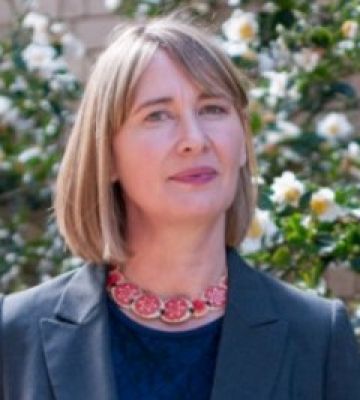
Professor Rebecca Bentley
University of Melbourne
Professor Rebecca Bentley (BBSc (Hons) PhD) is an internationally recognised researcher working at the intersection of housing, the built environment, health, and epidemiology.
She is Director of the National Health and Medical Research Council Centre for Research Excellence in Healthy Housing, leads the Victorian Community of Practice of the NHMRC Healthy Environments and Lives Network and sits of the Global Commission for Healthy Indoor Air.
Bentley's scholarship has been recognised by the NHMRC Fiona Stanley Research Excellence award and a Dame Kate Campbell Fellowship.
Getting to the University:
The HILDA Conference will take place at the The Spot, 198 Berkeley St, Carlton, at the University of Melbourne's Parkville campus.
Accessible Wayfinding document download (DOCX 38.8 KB)
From the CBD:
To get to the University of Melbourne from the Melbourne city centre, simply catch any tram going up Swanston Street. These trams run from Flinders Street Station and allow you to disembark at Stop 1 – opposite the University.
The Veriu Queen Victoria Market Hotel is a ten minute walk to the University and located in the vibrant area of the Queen Victoria Market.
From Carlton:
Zagame's House, Best Western Plus Travel Inn, and Melbourne Carlton Central Apartment Hotel are a 12-15 minute walk from the University of Melbourne.
Navigating the University of Melbourne
The University of Melbourne was founded in 1853 and is Australia’s second oldest university. The University spans two campuses with main campus located in Parkville and the second campus located in Southbank, where the Victorian College of the Arts resides.
You can download a PDF copy, or access the University of Melbourne interactive map.
Navigating Melbourne
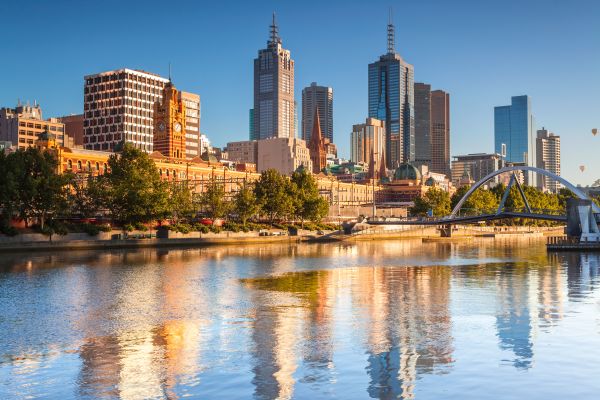
Melbourne, the capital of Victoria, is a beautiful city with fine buildings and spacious parks, which gives Melbourne its 'garden-city' title. Settlers from a variety of countries have given Melbourne a cosmopolitan outlook and the city has developed as the cultural, fashion, shopping, sporting and culinary centre of Australia.
Catching public transport:
Public transport commuters travelling on a full fare ticket are now able to use a credit card, phone or smartwatch across Melbourne.
Concession passengers will still need a myki card. You can purchase a myki card at most convenience stores or major train stations across Melbourne for $6.
There is a ‘Free Tram Zone’ within the Melbourne CBD, however outside of this area you will need to 'Touch On' your device, card or myki. You can download a map of the Free Tram Zone here. The free PTV app is also a useful resource to help with navigation by public transport.
Travelling from the airport:
The SkyBus travels from Tullamarine Airport to Southern Cross Station in the Melbourne CBD. The shuttle bus leaves the airport roughly every 20 minutes and costs $25.90 for a one-way pass or $43.40 for a return fare. Private shuttle buses from the airport can also be booked.
Things to see and do in Melbourne:
The central business district of Melbourne is based around the delta of the Yarra River at the top of a large bay. The city area contains some of Australia's finest parks, gardens and historic buildings, all within walking distance. Melbourne is also Australia's entertainment, sporting and cultural capital. Nearly every cuisine is represented in Melbourne's hundreds of restaurants and cafes.
Places of interest include:
- Melbourne Zoo
- Melbourne Skydeck for the awe inspiring view of Melbourne from the Southern Hemisphere's highest viewing platform
- Fed Square, a venue for food, arts, culture and public events across from Flinders St Station, including the amazing Torres Strait owned and operated Indigenous restaurant, Mabu Mabu
- Many waterfront restaurants and cafes along the Yarra River or the District Docklands precinct
- The National Gallery of Victoria
- Royal Botanic Gardens, recognised as one of the world's best, extending over 38 hectares and housing a collection of more than 8,500 species of plants from around the world
- The Koorie Heritage Centre, exploring 60,000 years of culture of the Indigenous people of south-eastern Australia
For more information on Melbourne and its surrounding regions, please visit the following websites:
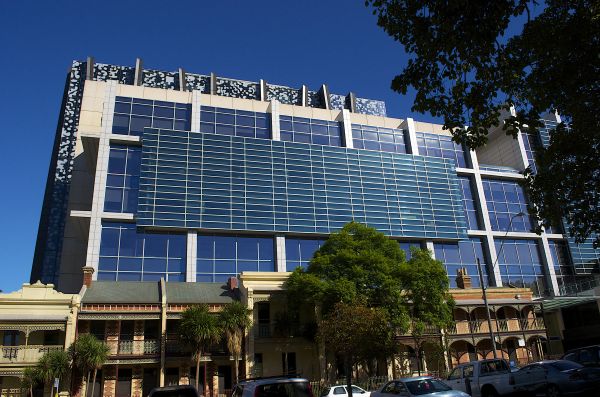
Melbourne Institute of Applied Economic and Social Research
The Melbourne Institute of Applied Economic and Social Research has worked for over 60 years to advance opportunity, equity, and prosperity in Australia and our region. Our world-class economists conduct rigorous, independent research and analysis, providing an evidence base for effective policy reform. We are a trusted partner for governments, industry, and communities, working to solve the complex challenges of our time.