Background
To support the NSW Government with its investigation into the costs and pricing of out-of-home-care (OOHC) services, Melbourne Institute health economists partnered with the Independent Pricing and Regulatory Tribunal NSW (IPART) to investigate and make recommendations on improving the foster care allowances scheme.
Our team, led by Dr Ou Yang, also included Professor Yuting Zhang, Associate Professor Jongsay Yong, Dr Karinna Saxby and Mr Ron Fisher, who all have extensive experience developing efficient funding models for equitable healthcare utilisation. A particular strength for our health economists includes their experience in analysing large-scale surveys and administrative data sets, translating data-driven research into actionable policy reform.
For the children and carers in the OOHC program, this policy reform was twenty years overdue, with the last major review dated from 2002. The NSW Government’s investigation was a response to systemic failures outlined in the 2024 report:
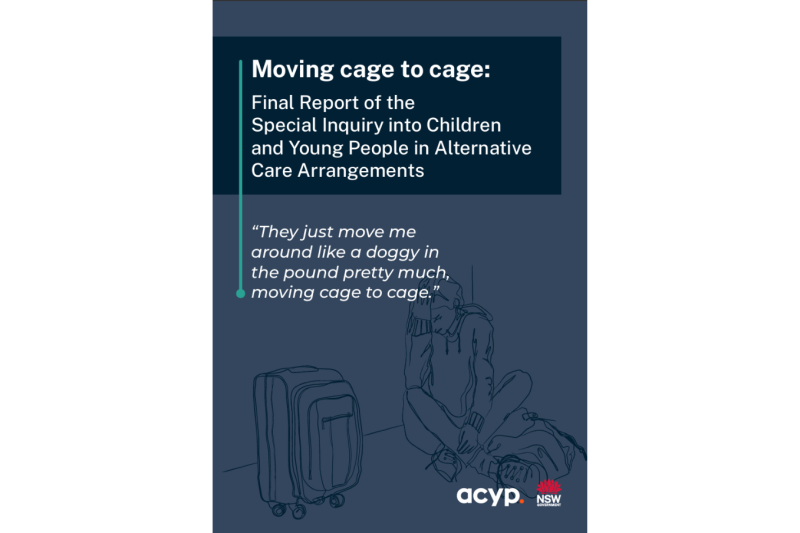
This report highlighted the extent to which the NSW OOHC program was under strain. Dissatisfaction for both children and carers was mounting, with a system that was failing to meet the needs of children and young people at an efficient cost.
Research methods
Our health economists undertook a rigorous quantification of foster-care household costs, differentiation by child age and remoteness, and validated findings using qualitative interviews detailing lived experience. Working with IPART we jointly developed the survey questions, ensuring policy priorities and regulatory constraints were incorporated from the outset.
A distinct challenge for this project was the lack of relevant administrative data. An alternative option was to use the Household, Income and Labour Dynamics in Australia (HILDA) Survey, a household-based panel study established in 2001, that annually collects information about economic and personal wellbeing, labour market dynamics and family life.
HILDA Survey data were used to model changes in household expenditure over 2006-2022. Two analytical approaches were tested: one that removes the effect of inflation to show how spending patterns themselves have shifted, and another that looks at the combined impact of inflation and changes in what households spend their money on.
Outcome
The quantitative data and qualitative survey results indicated that foster children incur 30-60% higher household costs than their peers, particularly in health, education and developmental supports. The expenditure categories from the initial 2002 report remained relevant, but the costs had risen substantially – that is, between 72-81% (depending on the age of the child). This was around 25-40% above the rate of inflation.

Our independent review for IPART delivered state-level policy impact in NSW.
This was announced in the 2025 state budget, with NSW Treasurer Daniel Mookey stating:
“Those with love to give a child needing foster care should have the financial means to do so”.
Image credit: Fiona Alston, The Sector, June 2025
Policy reforms were implemented from January 2026. This uptake has the potential to improve financial sustainability for thousands of carers and ensure foster children receive adequate resources for their well-being, education, and health. Long-term impacts include enhanced placement stability, improved child outcomes, and reduced system costs from placement breakdowns or unmet health needs.
Alex Jenkins, IPART Analyst
"IPART engaged the Melbourne Institute to help us identify an appropriate care allowance for foster carers in NSW. The Melbourne Institute proposal presented a clever way of undertaking the required analysis within the timeframe and budget that was available to us.
The study used HILDA data to estimate changes in the expenditure patterns of households with children of different ages over time. The team undertook detailed statistical analysis of HILDA data, complemented by a survey of NSW carers and participation in workshops with small groups of carers.
The study provided a rigorous and robust methodology that formed the basis of key IPART recommendations and ultimately, changes to the allowance for foster carers across NSW. The team worked collaboratively with IPART staff and was responsive to questions, comments and requests for additional analysis. The work was completed to our satisfaction, within the required timeframe and budget."
Learn more
Sustainable Development Goals
We align our research activity with the United Nations' Sustainable Development Goals (SDGs).