LGBTQ+ Economists and Allies in Asia-Pacific (LEAP) Summit
Wednesday 13 & Thursday 14 May, the University of Melbourne
Held across two days, Wednesday 13 and Thursday 14 May, the LEAP Summit brought together academics, community and government organisations, and industry partners from across the region, with a focus on the theme of advancing LGBTQ+ equity in workplaces, markets, and society.
The LEAP Summit showcased leading applied and empirical research, and facilitated knowledge exchange between researchers, decision makers, and community organisations, with the aim of fostering lasting networks.
Stay in the loop! Join the LEAP Summit mailing list to stay up to date with future LEAP events, news, and opportunities.
Join the LEAP mailing list
Contact: Please send any questions to LEAP-Summit@unimelb.edu.au
Important dates
Monday 3 November | Paper submissions open |
Wednesday 14 January | Paper submissions close |
Thursday 29 January | Notification of paper acceptance |
Thursday 19 February | Registrations open |
Wednesday 6 May | Registrations close |
Wednesday 13 and Thursday 14 May | Summit |
Friday 15 May | Early Career Researcher Workshop (by application only) |
Organising committee
Karinna Saxby, Senior Research Fellow, Melbourne Institute of Applied Economic and Social Research, the University of Melbourne
Andrew Clarke, Senior Lecturer, Department of Economics, the University of Melbourne
Patrick Devahastin, Lecturer, Institute for Population and Social Research, Mahidol University
Jan Kabátek, Senior Research Fellow, Melbourne Institute of Applied Economic and Social Research, the University of Melbourne
Victor Sojo Monzon, Associate Professor, Leadership, Department of Management and Marketing, the University of Melbourne
Maria Elisavet Peppa, PhD candidate, Faculty of Business and Economics, the University of Melbourne
Community Advisory Group
Sasha Bailey, Trans Health Research Group - Research Fellow, Department of Medicine, the University of Melbourne
Clue Coman, PhD candidate and research assistant, Centre for Social Research in Health, UNSW Sydney
Ian Down, Policy and Research Lead, LGBTIQ+ Health Australia
Mo Hammoud, Senior Lecturer, Kirby Institute for Infection and Immunity in Society, UNSW Sydney
Andrew Ireland, Postdoctoral Research Associate at Gies College of Business, University of Illinois Urbana-Champaign
Euan McKay, Designated Associate Professor, International Strategy Office, Nagoya University
Brendan Nolan, Senior Research Fellow, Department of Medicine, the University of Melbourne
Jo Steinle, Administrative Support Officer, Melbourne Institute of Applied Economic and Social Research, the University of Melbourne
Thank you to our supporters
The LEAP Summit has been made possible from funding from the Gender Lab (Faculty of Business and Economics, the University of Melbourne), and the Centre for Health Economics (Monash University).
About the Melbourne Institute
The Melbourne Institute is Australia’s pre-eminent economic and social policy research institution. We are renowned for our high-quality, independent and impartial applied research and our development of longitudinal survey tools. Our work with government, business and community groups has been powering effective change for over 60 years, and through our research we play an important role in creating fundamental policy and practice.
We enhance understanding of issues affecting Australia and Australians today, and apply this knowledge to shape debate and drive evidence-based change.
Day 1 - Wednesday 13 May
| Time | Session |
|---|---|
| 8:15am - 9:00am | Registration |
| 9:00am - 9:10am | Welcome to Country Wurundjeri Elder Annette Xiberras |
| 9:10am - 9:20am | Conference Welcome Professor Elaine Wong (Pro Vice-Chancellor (People and Equity), The University of Melbourne) |
| 9:20am - 9:30am | Opening Remarks Joe Ball (Victorian Commissioner for LGBTIQA+ Communities) |
| 9:30am - 10:30am | Keynote Address - "Economics, Sexual Orientation, and Gender Identity" In this presentation, Donn explores what economics reveals about the experiences of LGBTQI+ individuals, particularly regarding earnings and the influence of social and policy environments. Drawing on recent literature, they discuss recurring patterns, the evidence for the explanations behind them, highlight unresolved questions, and examine what the evidence suggests about improving LGBTQI+ lives. They conclude by considering the research directions most likely to create meaningful progress for LGBTQI+ communities. |
| 10:30am - 11:00am | Morning Tea |
| 11:00am - 12:40pm | Session 1 Advancing LGBTQ+ workplace equity in Thailand: Community-engaged strategies for improving well-being and economic inclusion The role of LGBTQ+ community partnerships in HIV prevention research in Australia |
| 12:40pm - 1:40pm | Lunch |
| 1:40pm - 3:20pm | Session 2 Transgender economics Differences in combustible cigarette and e-cigarette use by age and sexual orientation: Evidence from a national US sample 2021 to 2023 |
| 3:20pm - 3:50pm | Afternoon Tea |
| 3:50pm - 5:00pm | Panel: Shaping the next decade of engaged and impactful LGBTQ+ research Joe Ball (Victorian Commissioner for LGBTIQA+ Communities) (Panel Moderator) This plenary brings together community leaders from across the LGBTQ+ sector to reflect on what engaged and impactful research looks like in practice. Panellists from LGBTIQ+ Health Australia, Rainbow Health Australia, ILGA-Oceania, Proud 2 Play, and Our Watch represent a breadth of community priorities — from health equity and family violence prevention to sport, international advocacy, and the rights of diverse communities across Oceania. Together they explore what the research community needs to do differently over the next decade to ensure that evidence is shaped by, and genuinely serves, the people it concerns. |
| 5:15pm | Dinner Pre dinner drinks and canapes from 5:15pm. Dinner service begins at 6pm. Woodward Conference Centre Level 10, 185 Pelham St, Carlton Note: only for attendees who registered |
Day 2 - Thursday 14 May
| Time | Session |
|---|---|
| 8:15am - 9:00am | Registration |
| 9:00am - 9:10am | Opening Comments (pre recorded) The Hon Dr Andrew Leigh MP (Assistant Minister for Productivity, Competition, Charities and Treasury) |
| 9:10am - 10:10am | Keynote Address - "Structural stigma and LGBT health inequalities: A multi-method, multidisciplinary approach" |
| 10:10am - 10:40am | Morning Tea |
| 10:40am - 12:20pm | Session 3 Role of provider experience in quality of chronic disease care for transgender medicare beneficiaries Gender identity and competition: Going beyond binary gender economics |
| 12:20pm - 1:20pm | Lunch |
| 1:20pm - 2:35pm | Session 4 When Faith and Care Intersect: Improving LGBTIQA+ Inclusion in Faith-Linked Health Services |
| 2:35pm - 2:45pm | Introduction to the key themes from the pre-Summit survey Victor Sojo Monzon (The University of Melbourne) |
| 2:45pm - 3:15pm | Afternoon Tea |
| 3:15pm - 4:45pm | Panel: The future of LGBTQ+ research is multi-disciplinary Victor Sojo Monzon (The University of Melbourne) (Panel Moderator) This plenary draws on a central conviction of the LEAP Summit: that advancing LGBTQ+ equity requires collaboration across disciplines, methods, and institutions. Responding to research priorities identified by delegates themselves, panellists from economics, public health, law, and organisational behaviour explore where the field is heading and what it will take to build the evidence base the next decade demands. |
| 4:45pm - 4:50pm | Dean's Closing Address Professor Paul Kofman, Sidney Myer Chair of Commerce and Dean, Faculty of Business and Economics, The University of Melbourne |
| 4:50pm - 5:00pm | Reflections and Key Takeaways Dr Karinna Saxby (Melbourne Institute of Applied Economic and Social Research) Associate Professor Jan Kabatek (Melbourne Institute of Applied Economic and Social Research) |
Day 3 - Friday 15 May
| Time | Session |
|---|---|
| 9:00am - 4:30pm | Early Career Researcher Workshop Note: only for approved attendees |
Keynote speakers

Professor Mark L. Hatzenbuehler
Harvard University
Mark L. Hatzenbuehler, PhD, is a Professor of Psychology at Harvard, where he directs the Biopsychosocial Effects of Stigma Lab. He received his PhD in clinical psychology from Yale and completed his post-doctoral training in population health at Columbia, where he was a Robert Wood Johnson Foundation Health & Society Scholar.
Dr. Hatzenbuehler’s work has been published in leading journals across multiple fields, including Nature Communications, Nature Human Behavior, Proceedings of the National Academy of Sciences, Lancet Public Health, Annual Reviews of Public Health, JAMA Psychiatry, Psychological Bulletin, and American Psychologist.
He has received several awards for his work, including the Janet Taylor Spence Award for Transformational Early Career Contributions from the Association for Psychological Science, the Early Career Award for Distinguished Contributions to Psychology in the Public Interest from the American Psychological Association, the Division 44 Distinguished Scientific Contribution Award from the American Psychological Association, and the Gold Medal Award for Impact in Psychology (formerly the Gold Medal Award for Life Achievement) from the American Psychological Foundation. For the past 8 years, he has been named to the Highly Cited Researcher List by Clarivate Analytics in recognition of his research influence, as demonstrated by the production of multiple highly-cited papers that rank in the top 1% by citations for field and year in the Web of Science.
Dr. Hatzenbuehler is an elected fellow of the Academy of Behavioral Medicine Research, the premier honorary organization for scientists working at the interface of behaviour and medicine, and he has been appointed to serve on two consensus committees at the National Academies of Sciences, Engineering, and Medicine.
He was voted one of the favourite professors of the Harvard Class of 2023.

Professor Donn Feir
University of Victoria
Dr. Donn Feir is an applied econometrician who focuses on group-based inequality and has published in the areas of labour and health economics, as well as economic history. Donn is a Professor of Economics at the University of Victoria and a Research Associate at the National Bureau of Economic Research (NBER) and Research Fellow at the IZA Institute of Labour Economics.
Dr. Feir has published in journals such as the Review of Economic Studies, the American Economic Review: Insights, the Journal of Human Resources, as well as Canadian Public Policy and the Canadian Journal of Economics.
Joel Anderson
Joel Anderson is an Associate Professor and Principal Research Fellow at the Australian Research Centre in Sex, Health and Society. His research focuses on LGBTQIA+ health and wellbeing, minority stress, identity, prejudice, and social inclusion. Joel has led and collaborated on major national and international projects examining sexuality, gender diversity, religion, mental health, healthcare access, and structural stigma. He has published extensively in social psychology and LGBTQIA+ health research and is recognised among the Stanford–Elsevier Top 2% most-cited researchers globally. His work combines rigorous research with community partnership and policy engagement to improve equity and wellbeing for LGBTQIA+ communities.
Gray Babbs
Gray Babbs is a PhD candidate in Health Services Research at Brown University in Providence, Rhode Island, USA. He uses epidemiologic and econometric methods to identify barriers to high-quality care for individuals with chronic diseases and mental health conditions. His research evaluates the impact of Medicare and Medicaid policies on population health, with a particular focus on transgender, nonbinary, and intersex communities. After earning his PhD from Brown, he will join the Department of Health Care Policy at Harvard Medical School as a Postdoctoral Research Fellow.
Joe Ball
Joe Ball (he/him) is the Victorian Commissioner for LGBTIQA+ Communities. He is a proud transgender man.
The Commissioner advocates for the rights, safety and wellbeing of LGBTIQA+ communities. He is a longstanding LGBTIQA+ advocate who has had a 25-year career in disability, housing and homelessness, and social services.
Commissioner Ball was formerly CEO of Switchboard Victoria, where he oversaw the establishment of Rainbow Door, the Statewide family violence and mental health helpline. Joe is a member of the Expert Advisory Group for the Federal Government’s 10-Year LGBTIQ+ Health and Wellbeing Plan, the Victorian Family Violence Reform Advisory Group, and has participated in leading advisory bodies including for Safe + Equal, 1800RESPECT and the National Suicide Prevention Governance Committee.
Throughout his career, Joe has drawn upon the strength and guidance of LGBTIQA+ history and the work and wisdom of courageous LGBTIQA+ activists who have paved the way.
Nicky Bath
Nicky Bath (she/her) joined LGBTIQ+ Health Australia in August 2018 as Chief Executive Officer. She brings extensive experience in public health, including senior roles at ACON, the NSW Ministry of Health, and state and national drug user organisations, including as CEO of the NSW Users and AIDS Association. Prior to moving to Australia in 2000, Nicky managed an innovative harm reduction service within the UK National Health Service and contributed to projects commissioned by the World Health Organization. She is committed to advancing the health and human rights of marginalised populations through co-design and strong partnerships.
Adam Bourne
Professor Adam Bourne is Director of the Australian Research Centre in Sex, Health and Society (ARCSHS) at La Trobe University. He is a globally recognised leader in research relating to LGBTIQA+ health and wellbeing and leads a large program of such research at the Centre. Professor Bourne is Co-Chair of the Victorian Whole of Government LGBTIQA+ Ministerial Taskforce and sits on multiple Commonwealth expert advisory groups seeking to advance health and wellbeing for this population.
Travis Campbell
Travis Campbell is an Assistant Professor of Economics at Southern Oregon University with affiliate appointments in Healthcare Administration, Ethnic and Racial Studies, and Gender, Sexuality, and Women’s Studies. He is an applied microeconomist studying health, labor, and LGBTQ economics. His research appears in journals including PNAS, JAMA Pediatrics, The Lancet Regional Health – Americas, the Journal of Health Economics, and the Journal of Urban Economics, and has been featured in outlets such as The New York Times and Scientific American. His research has received the AEA CSQIEP Award for Outstanding Research Paper in LGBTQ+ Economics and the Warren Samuels Prize.
Curtis Chan
Curtis Chan is a Research Associate at the Kirby Institute, University of New South Wales. His research focuses on HIV prevention in gay, bisexual, and other men who have sex with men including PrEP awareness, PrEP uptake, and HIV/STI testing.
Ada Cheung
Professor Ada Cheung is an endocrinologist and NHMRC/Dame Kate Campbell Research Fellow at the University of Melbourne. She leads the Trans Health Research Group, focusing on improving healthcare and outcomes for transgender people through collaborative research. Ada’s work has influenced national guidelines, health service delivery, and policy. Her research excellence, media engagement and science communication has been recognised with the Victorian Tall Poppy Scientist of the Year Award 2025 and induction into the Victorian Honour Roll of Women as a Change Agent.
Margherita Coppolino
Margherita Coppolino (she/her) is an Intersectionality consultant
Margherita has undertaken the Australia Institute of Company Directors training and has sat a several Boards in Executive and non-executive positions. Recently was appointed Co-Chair of Inclusive Rainbow Voices (LGBTIQA+ People with Disability) and also Co-Chair of ILGA Oceania & member of the ILGA World Board. In 2020, was appointed as ILGA Oceania first Disability Sub-Committee Chair and is the current Vice Chair on Drummond/&Queer-space Board. She is immediate past President of the National Ethnic Disability Alliances. Has been appointed three terms to the Victoria Ministerial LGBTI Taskforce in 2020 and SBS Community Advisory Committee since 2019. Previously, she held the position of Chair on Arts Access Victoria and Australia Federation of Disability Organisations (AFDO) Boards. Non-Executive positions on Spectrum Migrants Resources Centre and Action on Disability Within Ethnic Communities, Women with Disabilities Australia and Short Statured People of Australia.
Both 2018 and 2021, Margherita was invited be a panelist member and Moderator on the LGBTIQA side events at the United Nationals CRPD (Convention of the Rights of People with Disability), COSP11 (Convention of the State Party), & COSP13 in New York.
Margherita is first generation Australian, born to Sicilian mother who migrated in the 1959. She was born with a Short Statured condition and is a proud feminist and lesbian.
Truc Ngoc Hoang Dang
Truc Ngoc Hoang Dang, Ph.D., is a lecturer at the Institute for Population and Social Research, Mahidol University, Thailand. Dr. Dang obtained a Doctor of Philosophy in Demography from the College of Population Studies, Chulalongkorn University, Thailand. Their research focuses on formal demographic methods, gender studies, sexual and reproductive health, and population issues, with expertise in analyzing large and complex datasets. Dang publications appear in leading journals ranked in the top 10% and 25% of the Scopus index, with over 85% authored as first author, corresponding author, or essential intellectual contributor. Recently, Dr. Dang has received the Mahidol University “Rising Researcher of the Year 2026” Award.
Sarah Etter
Sarah Etter is the Manager at SHARC (Self Help Addiction Resource Centre), a peer-led organisation that co-produces programs to support people impacted by alcohol and other drugs (AOD). Sarah has worked across the AoD sector for more than fifteen years in both government and non-government organisations, with leadership roles spanning service delivery, advocacy, and systems reform. Their work is informed by both professional experience as a qualified social worker and lived experience as a queer, non-binary person in recovery from Alcohol and Other Drug use. Sarah is passionate about strengthening lived experience leadership, inclusive practice, and community-led approaches within the AoD sector.
Paula Gerber
Professor Paula Gerber is a passionate advocate for the human rights of LGBTIQA+ people around the globe.
She is a law professor at Monash University in Melbourne, Australia, and an internationally renowned expert in international human rights law, particularly as it relates to LGBTIQA+ people. She is an award-winning teacher, the author of numerous books and articles, and is a highly sought after media commentator and public speaker. When she's not shaping minds in the classroom, Paula is the Chair of Kaleidoscope Human Rights Foundation, a not-for-profit organisation that advocates for better protection of the rights of LGBTIQA+ people in the Asia Pacific, a region where 15 countries still criminalise same-sex sexual conduct. She is also currently leading a research project on trans rights in Australia, to identify the community’s priorities for human rights reforms, and is the author of numerous books and papers on human rights topics, including, most recently, Sex, Gender and Identity: Trans Rights in Australia (2025) Monash University Publishing.
Muhammad Ishaq
Muhammad Ishaq is a Political Science graduate from the University of Management and Technology, where his research examined the China-Japan dispute in the East China Sea. He is currently affiliated with the University of the Punjab, Lahore. His research focuses on the social exclusion of transgender communities in Pakistan, alongside broader interests in inequality and international relations. His work has been published in the Journal of Politics and International Studies. He has also participated in an international summer school organized by the University of Peshawar in collaboration with the Hanns Seidel Foundation, Germany. Alongside his academic work, he actively contributes to a transgender rights NGO in Lahore.
Maxine Lee
Maxine Lee is an Associate Professor of Economics at San Francisco State University. She studies the economic well-being of marginalized populations, specifically focusing on gender, sexual, and romantic minorities and their education and labor market choices.
Nucharapon Liangruenrom
Nucharapon Liangruenrom is Deputy Director for Academic Affairs at Institute for Population and Social Research, Mahidol University, holds a PhD in Public Health. Her research interests include movement behaviours—physical activity, sedentary behaviour, and sleep—time-use epidemiology, health promotion, compositional data analysis, and systematic reviews. She teaches and supervises graduate students, serves as a reviewer for international academic journals, and has published in peer-reviewed international journals, contributing evidence to better understand behavioural patterns and support healthier populations.
Ed Low-Thurley
As Director of Data Integration Assembly at the Australian Bureau of Statistics, Ed leads a team of data engineers to deliver data integration projects and is responsible for the development of the Person Level Integrated Data Asset (PLIDA). He has oversight of data products accessed by government and academic researchers through the ABS DataLab, and supports researchers in their use of PLIDA data to generate insights and tell the real story of Australia.
Kade Matthews
Kade Matthews is a Melbourne-based leader dedicated to transforming Australian sport into a space of genuine belonging for LGBTQIA+ people. As Business Growth and Development Manager at Proud 2 Play, Kade focuses on advocacy and community-driven outcomes that improve health and wellbeing through participation. Deeply embedded in grassroots sport, he is the founder of Southern Lights Ice Hockey and Vice President of the Queer Sporting Alliance. From managing the F1 Grand Prix Pride Hub to fostering inclusive club cultures, Kade’s work empowers communities to prioritise safety, visibility, and lasting health outcomes for all participants.
Felicity McIntosh
Felicity McIntosh (she/they) operates at the intersection of the not-for-profit sector and LGBTQIA+ cultural communities, specialising in marketing, communications, partnerships and inclusive growth. Collaborating with industry, government and community, Felicity has lead strategy across community organisations, including Midsumma and the Victorian Pride Centre to embed inclusion, strengthen partnerships, and deliver measurable social and economic outcomes.
Cameron McNair
Cameron McNair is the Acting Coordinator, Peer Mentors in Justice at Self Help Addiction Resource Centre (SHARC). His work is grounded in lived experience of substance use, recovery, and navigating the AOD system firsthand.
As a proud member of the LGBTQIA+ community, Cameron works where identity and recovery meet, challenging stigma, centring peer voice, and helping build spaces that feel safe, real, and non judgemental.
Maria Elisavet Peppa
Alexander Plum
Alex Plum is an Associate Professor at Auckland University of Technology and Associate Director at the New Zealand Policy Research Institute, specialising in labour, health, and crime economics. His research focuses on inequalities affecting LGBTQ+ populations, with a particular emphasis on mental health, access to healthcare, and labour market outcomes. Using large-scale linked administrative data, including Stats NZ’s Integrated Data Infrastructure (IDI), he applies rigorous causal methods to generate policy-relevant evidence. His work aims to inform inclusive public policy and improve wellbeing outcomes for LGBTQ+ communities in Aotearoa New Zealand and internationally.
Nanchatsan Sakunpong
Associate Professor Dr. Nanchatsan Sakunpong is a counseling psychologist whose work focuses on the psychology of gender and sexual orientation, with particular emphasis on transgender and gender-diverse populations. Her research employs both quantitative and qualitative approaches to examine mental health and well-being and to develop culturally responsive psychological interventions. Overall, her work aims to advance inclusive mental health and well-being across the lifespan for sexual and gender minorities in Thailand.
Krista Seddon
Krista Seddon is Director of Innovation at Our Watch. She is a senior executive with deep experience in systems change, policy influence and evidence‑led primary prevention, and has previously held leadership roles at Safe and Equal, the Domestic Violence Resource Centre Victoria, and the Victorian Student Representative Council. Krista is a committed advocate for LGBTQIA+ inclusion and has led the development of Changing with Pride, Australia’s first national framework to guide the primary prevention of violence against LGBTQIA+ communities. She has also served as a Board Director with Girl Guides Victoria, YWCA Victoria and YWCA Australia, and contributes to national and international conversations on gender equality and social change.
Victor Sojo Monzon
Dr. Sojo is an Associate Professor in Leadership in the Department of Management and Marketing, FBE. He works in several interdisciplinary leadership, diversity management and equity research projects with government/industry partners. He is currently conducting research on leadership development in the public sector, dominant narratives about workplace gender diversity, macro-drivers of individual level well-being differences between men and women, and on the dimensions, prevalence, predictors and consequences of abuse at work and professional sport.
Victor lectures in Managing Behaviour in Organisations, Advanced HRM & Diversity Management. He speaks extensively about his research at academic conferences and industry events. Victor completed his PhD in Psychology at the University of Melbourne, working on human resilience to stress, positive emotions, and health. He undertook a Master of Science in Health Psychology, researching the impact of risk and protective factors on the health of unemployed individuals at the Simon Bolivar University, in Venezuela, and completed a Bachelor of Science in Industrial / Organisational Psychology (Magna Cum Laude) at the Central University of Venezuela.
Nathaniel M. Tran
Dr. Nathaniel M. Tran, PhD, is Assistant Professor of Health Policy and Administration at the University of Illinois Chicago School of Public Health. Their research aims to understand how public policies impact LGBTQ+ population health and aging across the life course. Tran received their PhD from Vanderbilt University and their BA from Tufts University (2017). Their research has cited by US federal courts and agencies to advance LGBTQ+ health and civil rights.
Raymond Trau
Raymond Trau is a Senior Lecturer in the Department of Management at Macquarie University in Sydney Australia. His research focuses on the impact of psychological and contextual factors on the workplace experiences of women, minorities and stigmatised groups (including LGBTQ+ workers), and the extent to which these experiences shape their wellbeing, attitudes, behaviours, and performance at work. Raymond's research has been published in leading international journals and received research mentions and interviews by major international and domestic media outlets, including the Financial Times, Bloomberg, CBS News, Globe and Mail, ABC TV, ABC News, SBS News, ABC Radio, HRM Monthly and HR Daily. Raymond also has contributed opinion pieces to the Harvard Business Review and The Conversation.
Sam Wade
Sam is a 3rd year PhD candidate at the Centre for Medicine Use and Safety at Monash University, and holds a Bachelor of Science, and a Master of Pharmaceutical Science from Monash University. Sam’s research focuses on the identification and validation of computable phenotypes in pharmacoepidemiology research, to enable reproducible research on the safety and efficacy of medications in novel populations.
Elisa de Weerd
Elisa de Weerd is a postdoctoral researcher at Radboud University, and a PhD Candidate at Erasmus University Rotterdam, School of Economics. She is an applied microeconomist studying inequalities in labor and health. Using Dutch administrative data, she studies dynamics in labor market outcomes of individuals going through legal and medical gender transitions.
LEAP Summit Presentation Slides
Advancing LGBTQ+ workplace equity in Thailand: Community-engaged strategies for improving well-being and economic inclusion
Ramida Mahantamak (Mahidol University)
Alicia K. Matthews (Columbia University)
Nanchatsan Sakunpong (Srinakharinwirot University)
Pilaiporn Sukcharoen (Suratthani Rajabhat University)
Social Exclusion and Economic Challenges Faced by Khawaja Sira Individuals in Lahore
Muhammad Ishaq (University of the Punjab, Lahore)
*Unfortunately, Muhammad was unable to travel to Australia, but he recorded his presentation to be shared with attendees.*
The role of LGBTQ+ community partnerships in HIV prevention research in Australia
Curtis Chan (Kirby Institute)
Using PLIDA and Linked Administrative Data to Advance Evidence on Equity in Work, Markets and Society
Ed Low-Thurley (Australian Bureau of Statistics)
Cultural infrastructure as economic equity: How Midsumma Festival advances LGBTQIA+ inclusion across workplaces, markets, and society
Karen Bryant (Midsumma Festival)
Felicity McIntosh (Midsumma Festival)
Transgender economics
Travis Campbell (Southern Oregon University)
Olivia Compton
Laura Nettuno (RAND Corporation)
Karinna Saxby (Melbourne Institute of Applied Economic and Social Research)
Gender identity and offending behavior: Evidence from linked administrative data in New Zealand
Maxine Lee (San Francisco State University)
Alexander Plum (Auckland University of Technology)
Differences in combustible cigarette and e-cigarette use by age and sexual orientation: Evidence from a national US sample 2021 to 2023
Elizabeth Jarpe-Ratner (University of Illinois Chicago)
Mingyue Lu (University of Illinois Chicago)
Nathaniel M. Tran (University of Illinois Chicago)
Rhiannon Chou Wiley (University of Vermont)
Dynamics in earnings and employment before and after transgender transitioning: Evidence from Dutch administrative data
John Cawley (Syracuse University)
Elisa de Weerd (Radboud University and Erasmus Universiteit Rotterdam)
Hans van Kippersluis (Erasmus Universiteit Rotterdam)
Role of provider experience in quality of chronic disease care for transgender medicare beneficiaries
Gray Babbs (Brown University)
Jaclyn M.W. Hughto (Brown University)
David J. Meyers (Brown University)
Amal N. Trivedi (Brown University)
Gender identity and depression among Thai university students: A nationwide analysis
Wannee Hutaphat (Mahidol University)
Mohsen Joshanloo (Keimyung University)
Sirinan Kittisuksathit (Mahidol University)
Nucharapon Liangruenrom (Mahidol University)
Published papers related to the summit
- Carpenter, C.S., Feir, D., Pendakur, K. and Warman, C., 2026. Nonbinary and transgender identities and earnings: Evidence from a national census. American Economic Review: Insights, 8(1), pp.36-52.
- Feir, D. and Mann, S., 2024. Temporal trends in mental health in the United States by gender identity, 2014–2021. American Journal of Public Health, 114(5), pp.523-526.
- Kabátek, J. and Perales, F., 2021. Academic achievement of children in same-and different-sex-parented families: A population-level analysis of linked administrative data from the Netherlands. Demography, 58(2), pp.393-418.
- Saxby, K., de New, S.C. and Petrie, D., 2020. Structural stigma and sexual orientation disparities in healthcare use: Evidence from Australian Census-linked-administrative data. Social Science & Medicine, 255, p.113027.
- Saxby, K. and Hammoud, M.A., 2025. Setting the standard: no LGBTI+ health equity without data equity. The Medical journal of Australia, 222(1), pp.52-52.
Getting to the University:
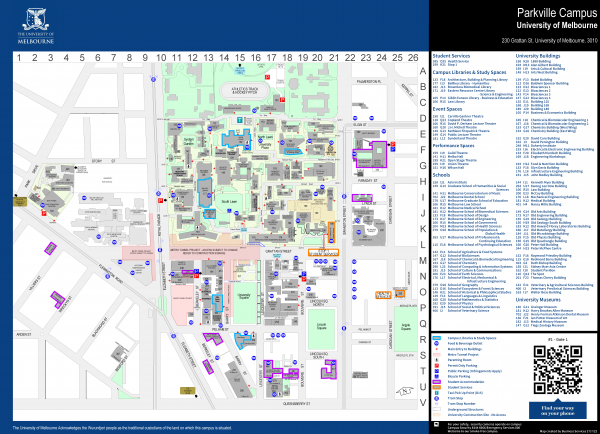
The LEAP Summit will take place at the Woodward Conference Centre, Level 10, 185 Pelham St, Carlton, at The University of Melbourne's Parkville campus.
Accessible Wayfinding document download (DOCX 38.2 KB)
From the CBD:
To get to the University of Melbourne from the Melbourne city centre, simply catch any tram going up Swanston Street. These trams run from Flinders Street Station and allow you to disembark at Stop 1 – opposite the University.
The Veriu Queen Victoria Market Hotel is a ten minute walk to the University and located in the vibrant area of the Queen Victoria Market.
From Carlton:
Zagame's House, Best Western Plus Travel Inn, and Melbourne Carlton Central Apartment Hotel are a 12-15 minute walk from the University of Melbourne.
Navigating the University of Melbourne
The University of Melbourne was founded in 1853 and is Australia’s second oldest university. The University spans two campuses with main campus located in Parkville and the second campus located in Southbank, where the Victorian College of the Arts resides.
You can download a PDF copy, or access the University of Melbourne interactive map.
>
Navigating Melbourne
Melbourne, the capital of Victoria, is a beautiful city with fine buildings and spacious parks, which gives Melbourne its 'garden-city' title. Settlers from a variety of countries have given Melbourne a cosmopolitan outlook and the city has developed as the cultural, fashion, shopping, sporting and culinary centre of Australia.

Catching public transport:
Public transport is free across Victoria until Sunday 31 May. You are not required to purchase a ticket during this time. More information can be found on Transport Victoria's website.
Travelling from the airport:
The SkyBus travels from Tullamarine Airport to Southern Cross Station in the Melbourne CBD. The shuttle bus leaves the airport roughly every 20 minutes and costs $24 for a one-way pass or $40 for a return fare. Private shuttle buses from the airport can also be booked.
Things to see and do in Melbourne:
The central business district of Melbourne is based around the delta of the Yarra River at the top of a large bay. The city area contains some of Australia's finest parks, gardens and historic buildings, all within walking distance. Melbourne is also Australia's entertainment, sporting and cultural capital. Nearly every cuisine is represented in Melbourne's hundreds of restaurants and cafes.
Places of interest include:
- Melbourne Zoo
- Melbourne Skydeck for the awe inspiring view of Melbourne from the Southern Hemisphere's highest viewing platform
- Fed Square, a venue for food, arts, culture and public events across from Flinders St Station, including the amazing Torres Strait owned and operated Indigenous restaurant, Mabu Mabu
- Many waterfront restaurants and cafes along the Yarra River or the District Docklands precinct
- The National Gallery of Victoria
- Royal Botanic Gardens, recognised as one of the world's best, extending over 38 hectares and housing a collection of more than 8,500 species of plants from around the world
- The Koorie Heritage Centre, exploring 60,000 years of culture of the Indigenous people of south-eastern Australia